
How a Colibrino station works
E-bike stations sized for one community. We plan them, install them and keep every bike charged, safe and ready. Here is the whole system, as a host and a rider see it.
For: Hosts weighing a station, and riders who want to know what they are using
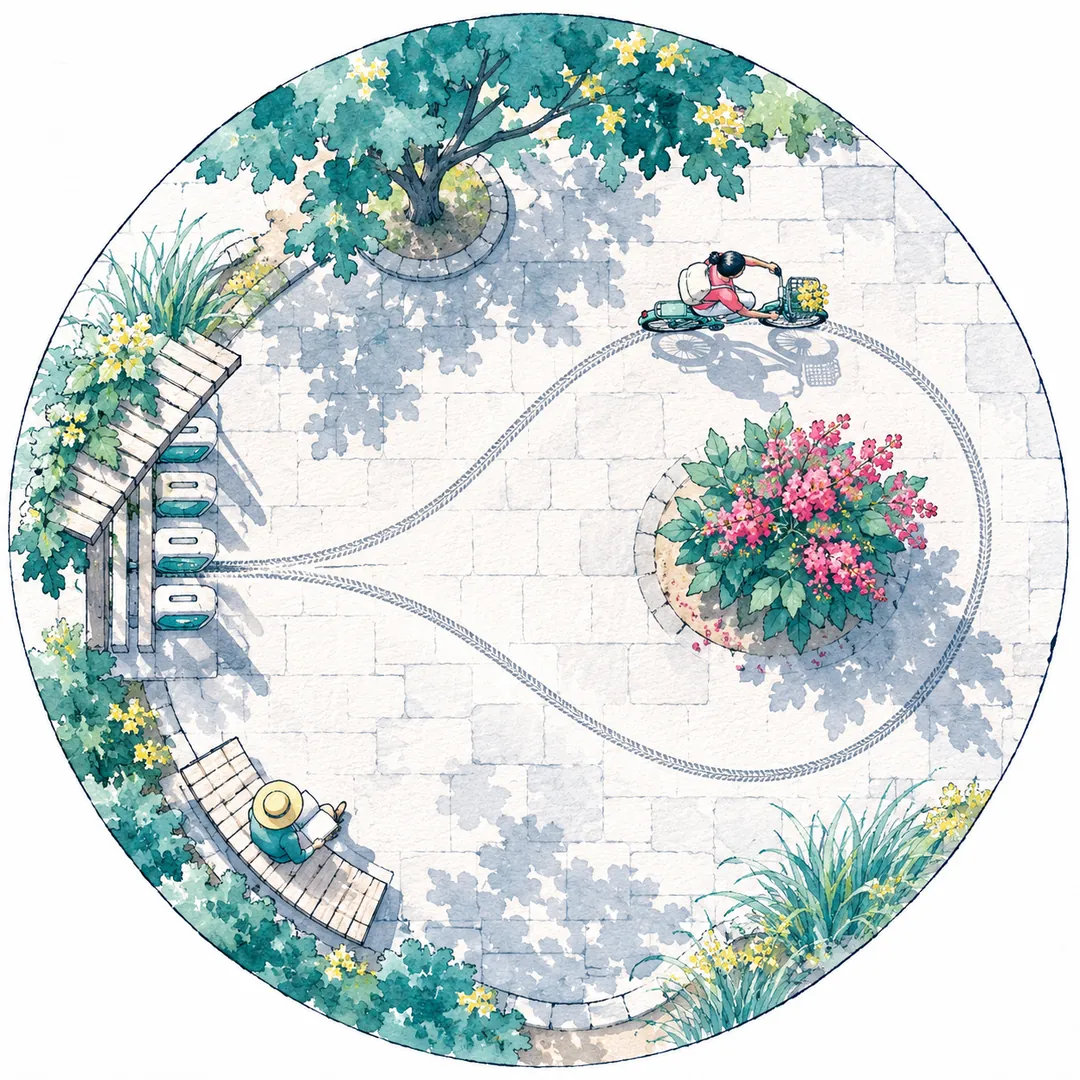
A Colibrino station is a small, complete system. It has four parts: lightweight e-bikes, a compact charging station the bikes lock into, a way for riders to sign up and take a bike, and a service loop that keeps every battery charged and every bike safe to ride. The host provides a spot, power and one contact person. Colibrino supplies and runs the rest, and sends the host a report every month.
This page walks through each part. If you are a rider, the rider guide covers the same ground from the saddle.
The bike
Every bike is a lightweight, step-through, Class 1 pedal-assist e-bike. Wyoming law defines a Class 1 e-bike as one whose motor helps only while the rider pedals and stops helping at 20 mph (W.S. 31-1-101). The same three classes are used in Colorado. There is no throttle, so the bike never moves on motor power alone. Wyoming law also requires the motor to stop helping when the rider stops pedaling or applies the brakes, and requires a label showing the class, top assisted speed and motor wattage (W.S. 31-5-707).
What Colibrino specifies for every bike it puts into service:
- An electrical system certified to UL 2849 by a nationally recognized testing laboratory.
- A battery certified to UL 2271, or tested as part of the UL 2849 system.
- Front and rear lights, a bell, and a lock that works with the station bay.
- Serial numbers checked against CPSC recall notices before the bike goes out and again after a recall alert.
These are the standards the U.S. Consumer Product Safety Commission built on in its June 2026 proposed rule for e-bike batteries and electrical systems, which would make UL 2849 and UL 2271, with added requirements, mandatory. The certifications belong to the bikes and batteries, not to Colibrino. The e-bike fleet page has the full specification, and the e-bike classes guide explains Class 1, 2 and 3.
The charging station
A station is a short row of bays under a weather hood. Each bay does two jobs: it locks the bike and it charges the battery. When a rider docks a bike, the bike is also plugged in. Nobody carries a battery anywhere.
- Bays that lock and charge. A bike stays locked until the next rider takes it out.
- A weather hood over the bays, so snow, rain and sun stay off the bikes and charging contacts.
- One circuit. A station runs from an existing electrical circuit where a licensed electrician confirms there is capacity for the charging load. Any electrical work is done by a licensed electrician.
- An anchored, level spot that keeps sidewalks, ramps, fire lanes and doors clear.
How many bays a station has depends on the site, and the network plan sets it. You can test the numbers for your own site with the fleet size calculator and the station power calculator. The charging stations page covers installation.
Example (fictional). At Larkspur Commons, a fictional 240-home apartment community, each of 2 stations has 8 bays. Each station’s 8 bikes charge on one 20-amp, 120-volt circuit: 800 W at peak with every bike charging, 41.7% of the circuit’s 1,920 W planning limit. The example network shows the whole plan.
Rider access
From the rider’s side, a ride has four steps.
- Sign up. The rider creates an account and accepts the program’s rider terms. Who can sign up depends on the program: residents of a property, students and staff of a campus, or members of the public in a neighborhood program. Each program sets a minimum rider age.
- Unlock. Depending on the program, the rider unlocks a bike with a phone app or with a code at the station.
- Check and ride. A quick look at the brakes, tires, lights and battery comes first; the pre-ride checklist lists it all. Then the rider rides within the program’s riding area and its rules.
- Return to a bay. The rider locks the bike into any open bay at a station in the program. The ride ends when the bike is locked, and charging starts on its own.
Who pays depends on the program. In a resident amenity program the property or HOA pays and residents ride at no charge or at a member rate. In a neighborhood program riders pay per ride or by pass. Prices are set in the network plan after the site walk. The programs page compares the options, and rider access and payments explains the setup.
The charge and maintenance loop
Charging is Colibrino’s job, never the rider’s. Riders do not take batteries home and do not charge them indoors. Batteries charge only in the station bays or in a Colibrino charging area, from the manufacturer’s charger, plugged straight into the supply with no extension cords or power strips.
Cold changes the routine. The London Fire Brigade notes that cold reduces a lithium-ion battery’s range and slows charging, and warns never to charge a frozen battery. Colibrino does not charge batteries while they are frozen and follows each battery maker’s charging temperature limits. Every site has a written winter plan; see seasonal operations.
| Job | Who does it |
|---|---|
| Charging batteries | Colibrino, in the station bays or an operator charging area |
| Checking brakes, tires, lights, locks and battery condition | Colibrino, at every station visit |
| Taking a damaged bike or battery out of service and repairing it | Colibrino |
| Moving bikes when a station runs empty or full | Colibrino (rebalancing) |
| A quick check before each ride | The rider |
| Reporting a problem | The rider or the host contact, to Colibrino support |
| Providing the spot, power and a contact person | The host |
The maintenance and rebalancing page goes into the service work. The safety page explains why charging stays with the operator.
The monthly report
Each month the host receives a ride report with four fields: trips, active riders, bike availability, and issues and fixes. It shows counts for the program, not where any one rider went. The host can export its program data as a CSV file at any time and at the end of the program. At the end of a season, Colibrino writes a season review that recommends keeping, resizing, moving or ending the station. The ride data and reporting page lists what each report contains.
What the system leaves out
Colibrino runs Class 1 pedal-assist bikes only. It does not run e-scooters, Class 2 or Class 3 bikes, or throttle bikes, and it does not leave dockless bikes on public sidewalks. A station on a public street or sidewalk needs a city agreement first.
To see how a station goes from first conversation to first ride, read how we work, or plan a station for your property.
Start with one station.
Tell us about the place: how many homes or beds, where people come and go, and where the nearest outlet is. We reply with questions or a time to walk the site with you.