
Who we serve, and how each host is different
The bikes and the station are the same everywhere. Who decides, who pays and which rules apply change with every host, so each page below starts there.
For: Property managers, HOA boards, campus offices, neighborhood groups and developers
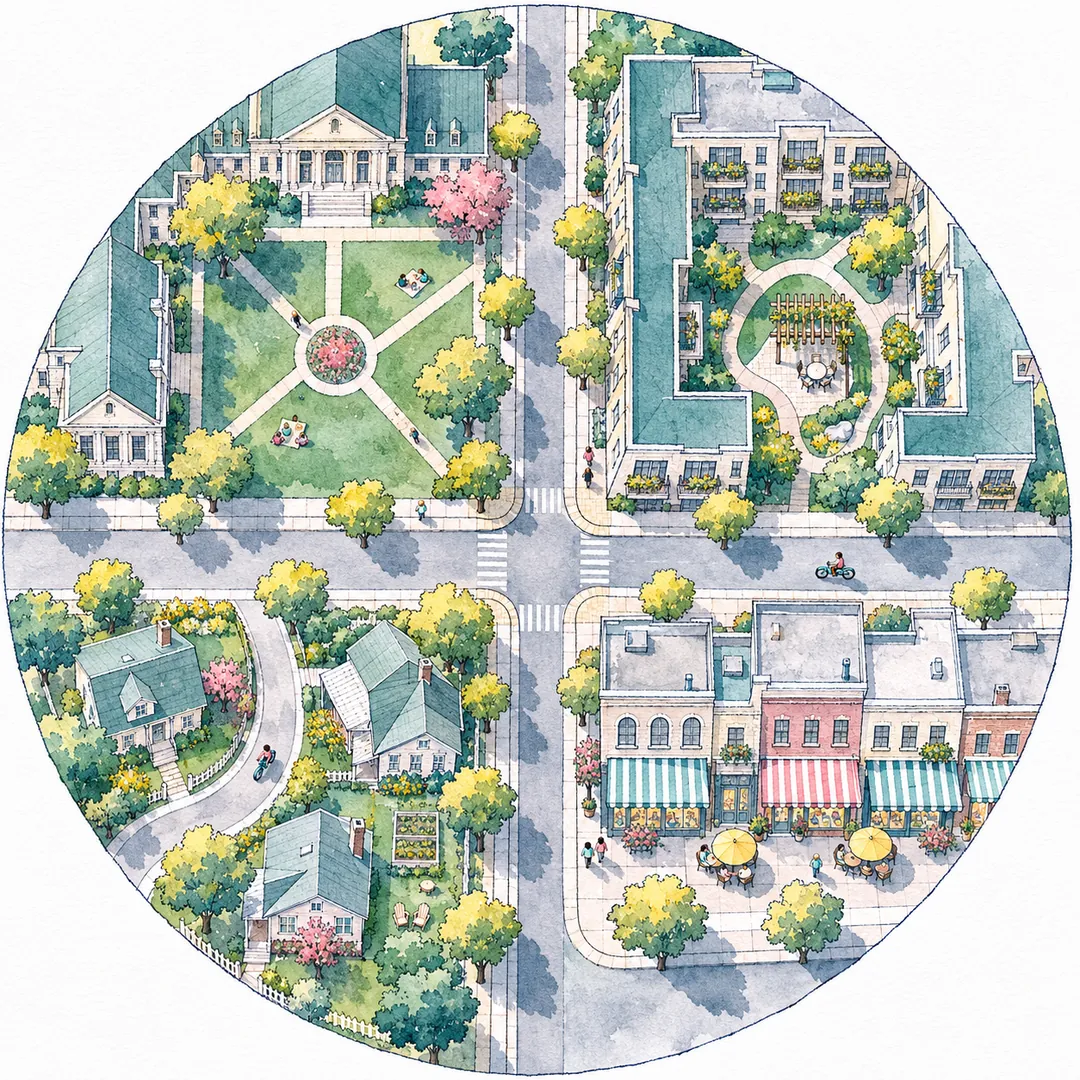
Colibrino plans, installs and runs small e-bike stations at the places people live and study. The equipment and the daily work are the same for every host: lightweight Class 1 pedal-assist bikes, a compact charging station, and an operator who keeps every bike charged, inspected and ready. Riders never charge a Colibrino battery at home or indoors.
What changes from one host to the next is everything around the station: who makes the decision, who pays for the program, and which rules the station has to fit. A property manager answers to an owner and thinks about amenities, parking and what residents do with batteries inside the building. A campus office works alongside a risk office and campus policy. An HOA board answers to its members and its covenants. A downtown organization often controls little land of its own, so the city has a say as soon as a station touches a street or sidewalk. A developer can place the station and its circuit before the concrete is poured.
Who decides, and what fits
| Host | Who usually decides | Program that usually fits | Rules to settle first |
|---|---|---|---|
| Apartment community | Property manager and owner | Resident amenity | Lease terms, insurer, fire code for charging |
| University | Transportation or sustainability office, with the risk office | Campus program | Campus e-bike policy, indoor charging rules |
| Student housing | Owner and on-site management | Resident amenity, with term options | Leases, nearby campus rules, a summer plan |
| HOA or planned community | The board, sometimes a member vote | Resident amenity or seasonal pilot | Covenants, path rules, minimum rider age |
| Neighborhood or downtown | The organization’s board, and the city for public space | Neighborhood pay-per-ride | A city agreement for any street or sidewalk spot |
| New development | The development team, with the city during approvals | Resident amenity once residents move in | Parking and transportation demand management rules in local code |
Any host can start with a seasonal pilot: one station for one riding season, with a written review and a decision at the end.
What every host has in common
Every host provides a spot on land it controls, access to power (a licensed electrician confirms the circuit), one named contact, the approvals the spot needs, and help telling residents or students about the program.
Every host receives the bikes and station, installation, charging, inspections, repairs, rebalancing, rider sign-up and support, launch materials with a safety session, a monthly ride report and a season review. The how we work page walks through the six stages, from site walk to season review.
Pick the page below that is closest to your situation, or plan a station and let the site walk sort out the rest.
- Apartment communities
A resident amenity with bikes at the lobby door and batteries that never go upstairs.
- Universities
A campus program shaped by campus policy, with trip and availability data for your office.
- Student housing
Shared bikes for residents, charged outside the building, planned around the term.
- HOAs and planned communities
A member amenity on common ground, with rules the board adopts and a pilot option.
- Urban neighborhoods
Pay-per-ride stations on private land or under a city agreement.
- Property developers
Station spot, circuit and program planned during design, ready for the first residents.
Start with one station.
Tell us about the place: how many homes or beds, where people come and go, and where the nearest outlet is. We reply with questions or a time to walk the site with you.