
Rider guide
Everything you need to ride a Colibrino bike, from signing up to locking it back into a bay. The short version is that the bay charges the bike and you never take the battery home.
For: Residents, students and neighbors riding a Colibrino bike
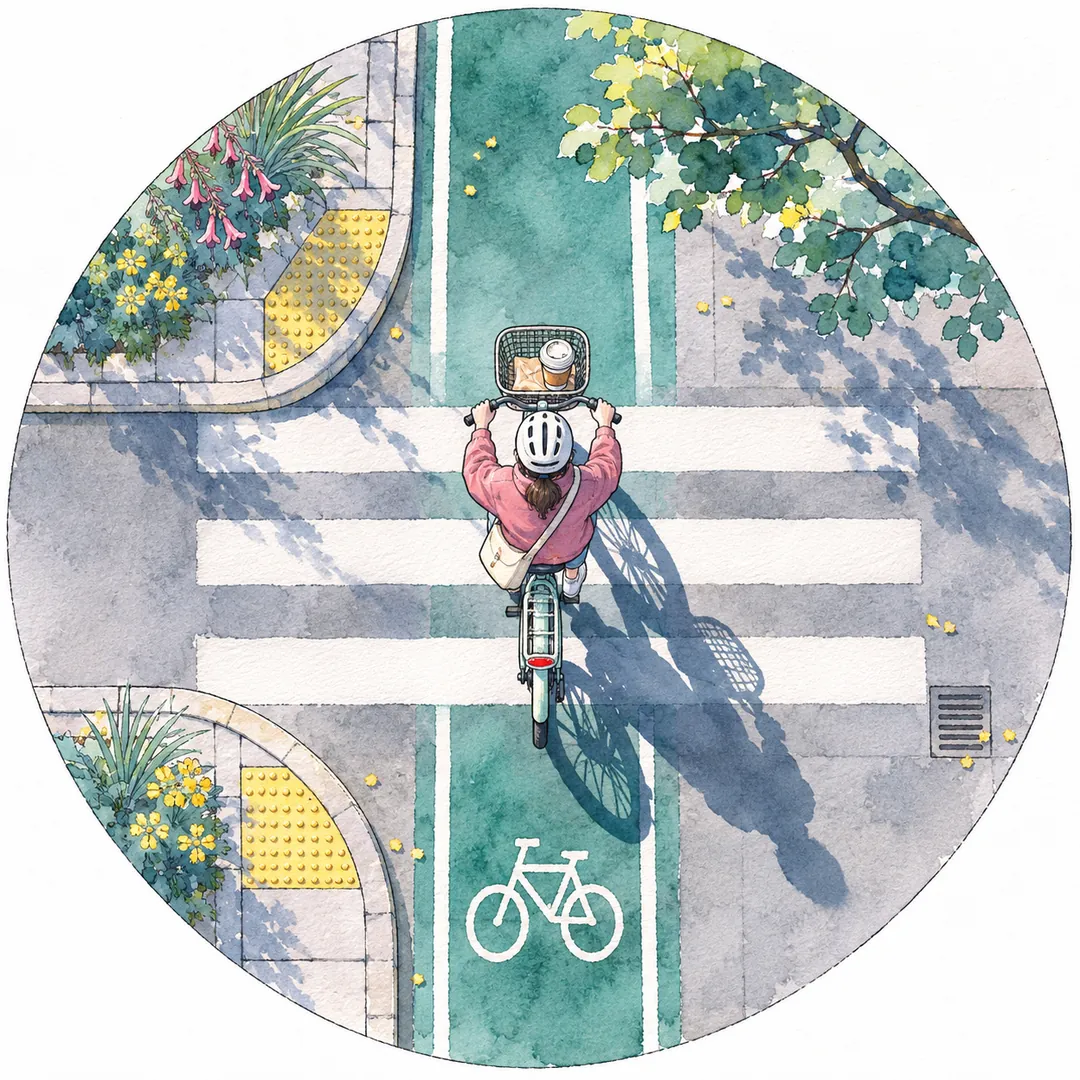
A Colibrino bike is a lightweight, step-through e-bike that helps while you pedal. It lives in a station bay that locks it and charges it. You take it out, ride, and lock it back into a bay when you are done. This guide covers each step, the rules of the road where Colibrino plans to work, and who to call when something is not right.
Who can ride
Each station runs under a program, and the program decides who can ride. In a resident program, it is the residents of that property or community. In a campus program, it is the students and staff the campus names. In a neighborhood program, it is anyone who signs up and meets the terms. Every program sets a minimum rider age with its host, and you accept it, along with the rest of the rider terms, when you sign up. One rider per bike: no passengers.
Signing up
You create an account and accept the rider terms. If your program charges for rides or passes, you add a payment method; in some resident programs riding is included and there is nothing to pay. During launch week there is a short in-person safety session. It is worth the time even if you ride a bike every day, because it covers the assist levels, docking and the rules for your site.
Unlocking a bike
Depending on your program, you unlock a bike with the phone app or with a code at the station. Your ride starts when the bike leaves the bay.
Before you ride
Take one minute for a check. Look at the battery level, both tires and the frame. After you unlock, squeeze both brakes while walking the bike, set the seat height, and switch on the lights. The pre-ride checklist lists every item. If anything is wrong, put the bike back in its bay, take another, and tell support.
Riding
Assist levels
Every Colibrino bike is a Class 1 pedal-assist e-bike. The motor helps only while you pedal and stops helping at 20 mph. There is no throttle, and the motor stops helping as soon as you stop pedaling or brake. Start in a low assist level until you know how the bike responds. Use more assist for hills and headwinds, knowing it uses more battery; the range estimator shows how much.
Where e-bikes may go
This is a summary, not legal advice, and local rules differ from city to city and campus to campus. Your program’s rider rules also say where riding is allowed on the property.
- Wyoming. A person riding an e-bike has the rights and duties of the driver of a vehicle (W.S. 31-5-702). A city or state agency may regulate the use of e-bikes on trails it manages, including nonmotorized trails (W.S. 31-5-707), and local authorities may regulate how bicycles and e-bikes are ridden and require registration (W.S. 31-5-109). The e-bike section of state law sets no age or helmet rule, but cities can add their own.
- Colorado. The Colorado Department of Transportation says Class 1 and Class 2 e-bikes are generally allowed wherever traditional bicycles are permitted, and that cities can further restrict e-bike use on specific trails. CDOT recommends helmets for every class.
Before riding a path or trail, look for posted signs. The e-bike classes guide has more detail on both states.
Riding in wind
Wind is part of riding here. The Wyoming State Climate Office notes that Wyoming has the highest annual average wind speed in the country, 12.9 mph, and that winter winds often reach 30 to 40 mph with gusts of 50 or 60 mph. At the Cheyenne airport in 2025 the average wind was 11.3 mph and the highest gust was 75 mph, according to the National Weather Service.
- Expect gusts at building corners, open intersections and gaps between buildings.
- Keep both hands on the bars and slow down in crosswinds.
- Raise the assist into a headwind, and allow extra battery for the trip home.
- If gusts are pushing the bike around, get off and walk it. On the worst days, leave the bike in its bay.
Riding in winter
In a normal year the low at the Cheyenne airport drops to freezing or below on about 170 days, according to the National Weather Service. The London Fire Brigade notes that cold reduces a lithium-ion battery’s range and slows charging, so a bike may go less far on a cold morning than on a mild afternoon.
- Check the battery level before a longer ride.
- Use the lights: winter afternoons get dark early.
- Brake earlier and go slower where paths are shaded, wet or icy.
- Wear gloves and cover your ears under the helmet.
Depending on the site’s winter plan, a station may run with fewer bikes in winter or close until spring. The station sign and your program’s notices will say which.
Returning a bike
Ride to any station in your program and lock the bike into an open bay. Check that it is locked; your ride ends when it is. The bay charges the bike, so there is nothing else to do. If every bay is full, go to another station in the program or call support. Never leave a bike outside a bay, in a hallway, a stairwell or a unit.
Never charge at home
Do not take a Colibrino battery off the bike, and never charge a Colibrino bike at home or indoors. Only the station bays and Colibrino’s own charging area charge these batteries. That is the core of how Colibrino keeps riders and buildings safe; the safety page explains why.
Reporting a problem
Email support@colibrino.com or call (307) 365-7748 for a flat tire, a brake that feels wrong, a bay that will not lock, damage, or a billing question. If you can, lock the bike into a bay and say which station it is at.
- If anyone is hurt, call 911 first.
- If a battery smokes, move away, keep others back and call 911. Do not try to put it out.
Your data
Colibrino uses your account details to run your account, take payments and answer support requests. The host receives counts, such as trips and active riders, not where you went. Colibrino does not sell rider data. The privacy policy has the details.
Start with one station.
Tell us about the place: how many homes or beds, where people come and go, and where the nearest outlet is. We reply with questions or a time to walk the site with you.