
E-bike stations for student housing
Student housing runs on the academic calendar and on a lot of batteries. A Colibrino station gives residents shared bikes for the ride to class and keeps every shared battery charging outside the building.
For: Owners and operators of purpose-built, off-campus student housing
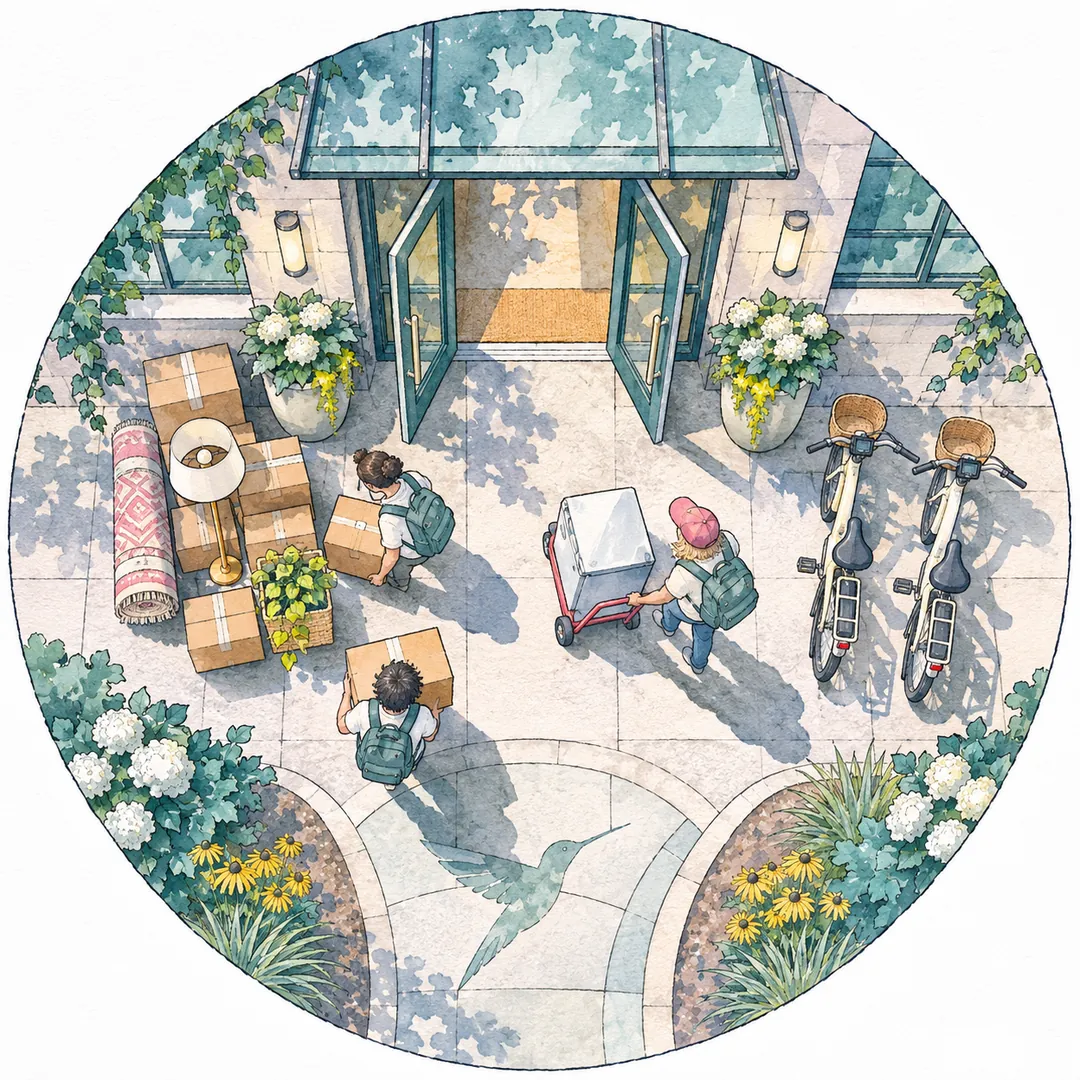
A purpose-built student community sits a short ride from campus and fills up for the academic year. Residents arrive for the fall term and many leave after the spring term. Some bring an e-bike or an e-scooter, and with it a lithium-ion battery that charges in a bedroom or a shared living room. A Colibrino station gives residents shared Class 1 pedal-assist bikes for the trip to class and back, and keeps every shared battery charging in the station’s bays.
What an operator weighs
Batteries in shared units
Campuses are already worried about this. In a 2025 study with the League of American Bicyclists’ Bicycle Friendly University program, UL Standards & Engagement found that 63% of respondents believe riders charge their e-bikes in residential buildings, and more than 65% cited inadequate charging infrastructure as an issue. Off-campus housing serves the same students.
Fire guidance is strict about indoor charging. FDNY guidance, based on the 2022 New York City Fire Code, says to plug directly into a wall outlet away from exits, never through extension cords or power strips, and calls for a dedicated, ventilated room with a self-closing door, or a separate one-hour fire-rated, sprinklered room, once more than five devices charge. UL Standards & Engagement advises never leaving batteries unattended while charging and never charging overnight while sleeping.
Colibrino’s shared bikes never go into a unit. Each one charges in its station bay with the manufacturer’s charger, on a circuit a licensed electrician has confirmed. Riders do not take batteries home. Every bike Colibrino specifies is certified to UL 2849, and every battery to UL 2271 or as part of the UL 2849 system.
A shared fleet will not make residents’ own e-bikes disappear. The community e-bike rules builder includes a rule for personal e-bikes and batteries, and the battery safety checklist covers charging areas, so the property can set a clear policy for personal devices at the same time.
The academic calendar
Student housing has a rhythm that apartments do not: move-in, the first weeks of term, finals, winter break, summer. The network plan follows it. Launch week is best held once residents have settled in, rather than on move-in day, so the safety session competes with fewer boxes. Over winter break and summer, the plan reduces the fleet or stores it, and a relaunch inspection happens before residents return. Every site gets a written winter plan; seasonal operations explains the options.
Getting to campus
With one station at the building, every trip starts and ends at home, and the rider rules say where a bike may be locked during a class or a shift. A second station near campus needs permission from the campus for its land, or a city agreement if it would sit on a public street or sidewalk. The universities page explains how a campus office looks at that question.
Who pays
Most student communities fit the Resident amenity program: the property pays a monthly program fee, and residents ride at no charge or at a member rate the property chooses. A property that wants riders to share the cost can sell a pass by term at a rate it chooses; rider access and payments explains the options. Prices are quoted after the site walk and set in the network plan. A Seasonal pilot runs one station for a fixed term, normally one riding season, and ends with a written review and a decision.
What the property provides, and what it receives
| The property provides | The property receives |
|---|---|
| A spot near the main entrance, on land it controls | Class 1 pedal-assist bikes and a compact charging station, installed |
| Access to power, confirmed by a licensed electrician | Charging in the station bays, inspections, repairs and rebalancing |
| One named contact on the management team | Rider sign-up, access, payments and support |
| Approvals from the owner, insurer and anyone else the spot needs | Launch materials and a safety session for residents |
| Help reaching residents: move-in packets, resident apps, events | A monthly ride report, a CSV export and a season review |
Rules to settle first
- Who may ride: residents only, or guests too, and a minimum rider age set with the property.
- Lease terms: whether the program needs a lease addendum or a house rule.
- Personal devices: where residents may store and charge their own e-bikes and scooters, if anywhere.
- Move-out: how bikes are returned and accounts closed in the last week of the lease.
- Breaks: which months run with a reduced fleet and which with storage.
- Insurer and fire marshal: anything they require of the charging station.
Example (fictional). A fictional 300-bed student community sits about a mile and a half from campus. The site walk finds a spot beside the leasing office door, lit at night and visible from the front desk, with power from a nearby panel that the electrician must confirm. The network plan proposes a resident amenity with a member rate by term, one station beside the leasing office, and launch week in the second week of the fall term. The fleet is reduced over winter break and stored over summer, with a relaunch inspection before fall move-in. The plan notes that any station on campus land would need the campus’s approval first, and leaves that for a later season.
The campus mobility section of our journal covers student housing and campus policy in more depth. When you are ready, plan a station and we will walk the property with your manager.
Start with one station.
Tell us about the place: how many homes or beds, where people come and go, and where the nearest outlet is. We reply with questions or a time to walk the site with you.