
Battery and charging safety checklist
Sixteen checks for any place where e-bikes are charged or stored, from the certification marks on the equipment to what staff do if a battery smokes.
For: Property managers, facilities staff, campus housing and fire safety officers
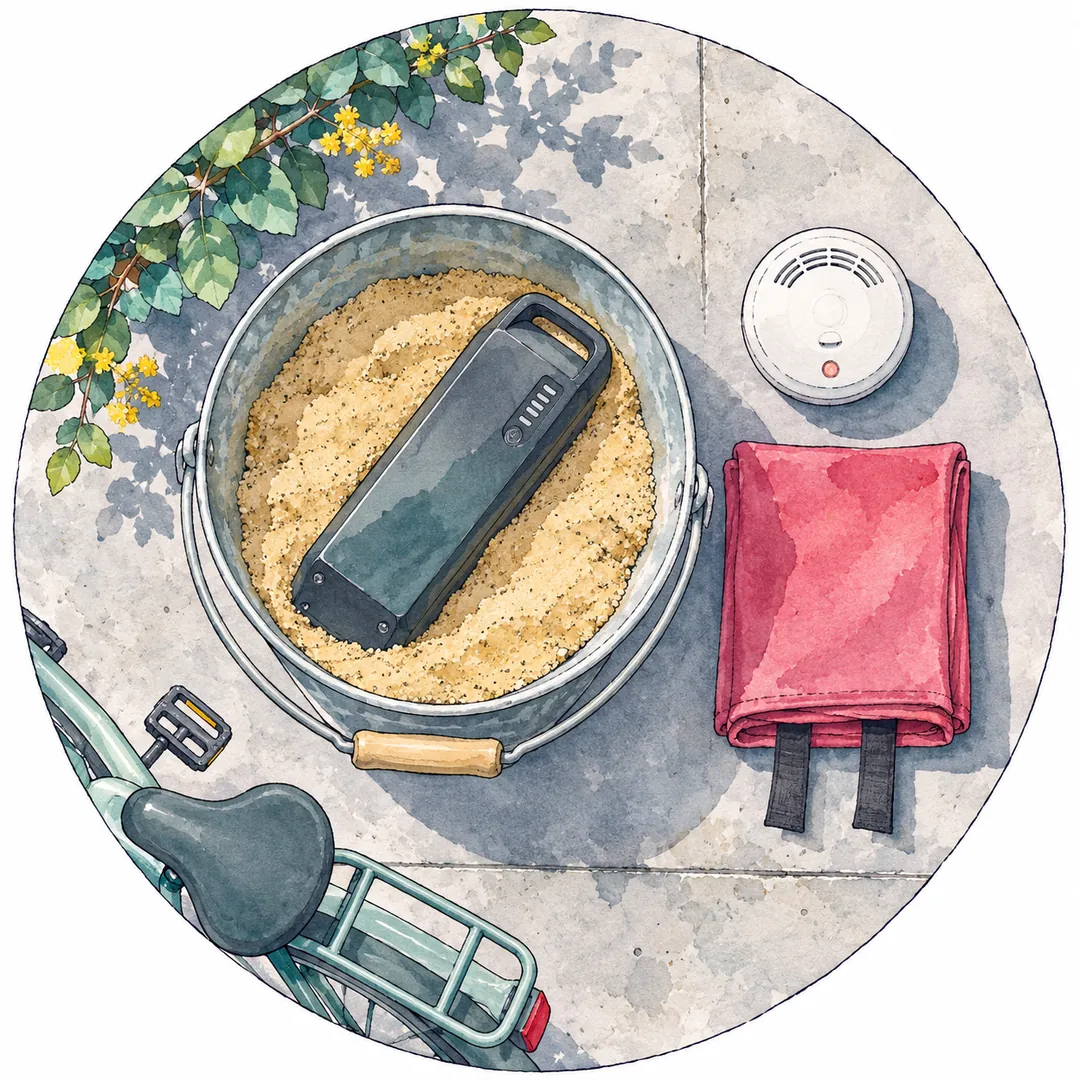
Checklist
Lithium-ion battery fires are a documented risk with e-bikes. In its proposed safety rule for micromobility batteries, published June 24, 2026, the U.S. Consumer Product Safety Commission says it is aware of 227 incidents from 2019 through 2023, such as fires, explosions and overheating, that the rule could potentially have prevented; 90 of them are associated with 39 deaths and 181 injuries. This checklist has 16 items in four groups for any place where e-bikes are charged or stored: a shared station, a bike room or a storage cage.
Colibrino’s own rule is simpler than any checklist: riders never charge Colibrino batteries at home or indoors. Charging happens only in the station bays or in an operator facility, with manufacturer chargers only and no extension cords or power strips.
How to use the checklist
Walk the charging area with the list. Tick each item you can confirm; the counter shows how many of the 16 are confirmed. Print it or download it as a CSV file and keep it with your safety records. Go through it again after any change to the area or the equipment.
The four groups
Equipment (4 items)
UL 2849 covers the electrical system of an e-bike, and UL 2271 covers batteries for light electric vehicles. Look for a certification mark from a nationally recognized testing laboratory. CPSC’s proposal would make compliance with these standards, with modifications, mandatory. Use only the charger made for each battery: UL Standards and Engagement (ULSE) advises using only the charger supplied or recommended by the manufacturer. No adapters, no modified cords. Check serial numbers against CPSC recall notices before use and after each recall alert.
Where charging happens (4 items)
Charging belongs at the station or in a designated charging area, not in hallways, stairwells or near exits. Plug chargers directly into a wall outlet or a hard-wired supply. As a reference, FDNY’s guidance under the New York City Fire Code says to charge away from exits, plug directly into a wall outlet and use no extension cords or power strips, and calls for a dedicated, ventilated room with a self-closing door, or a separate one-hour fire-rated, sprinklered room, when more than five devices charge. That is New York City’s rule; your local fire code and fire marshal decide what applies where you are. Keep anything flammable away from charging bikes, and make sure the area has smoke detection and a clear way out.
Inspection (4 items)
Look at every battery before it charges: swelling, cracks, leaks, heat or a smell mean it does not get charged. A bike that has been in a crash or a flood comes out of service until it is checked. Batteries are not charged while frozen; they warm to room temperature first, in line with ULSE’s advice not to charge batteries in extremely hot or cold temperatures. Stop charging once the battery is full where the system allows it. ULSE reports that 55% of e-bike owners in its survey admit leaving devices plugged in after a full charge.
If something goes wrong (4 items)
If a battery smokes, hisses or burns, people leave, close the door and call 911. NYC DOT notes that water and fire extinguishers do not work on lithium-ion battery fires. Store a damaged battery away from buildings until it is recycled, and send damaged and end-of-life batteries to a battery recycler, never the trash. Record every incident and report it to the operator the same day.
How Colibrino applies it
Colibrino specifies bikes certified to UL 2849 and batteries certified to UL 2271, or tested as part of the UL 2849 system, by a nationally recognized testing laboratory, and checks bikes and batteries against CPSC recall notices. Every station visit includes a check of battery condition, and damaged bikes and batteries are taken out of service. The safety page sets out the full approach, and maintenance and rebalancing describes the station visits.
Reading your result
Treat any unticked item under Equipment or Where charging happens as a reason to stop charging in that area until it is fixed. The items under If something goes wrong are about people: make sure staff know them before they ever need them.
Limits
This checklist does not replace a fire code review. Your fire marshal, building official and insurer set the requirements for your building.
What to do next
Write the charging rules into your community rules with the community e-bike rules builder, check a station spot with the site assessment checklist, or read more in Charging and batteries. To plan a station where charging stays in the bays, plan a station.
Start with one station.
Tell us about the place: how many homes or beds, where people come and go, and where the nearest outlet is. We reply with questions or a time to walk the site with you.