
Rider onboarding, safety sessions and support
New riders get a safety session and a written guide before their first ride, and a person to call or write to afterward. Your staff do not become the help desk.
For: Property managers, HOA boards, campus offices and neighborhood groups
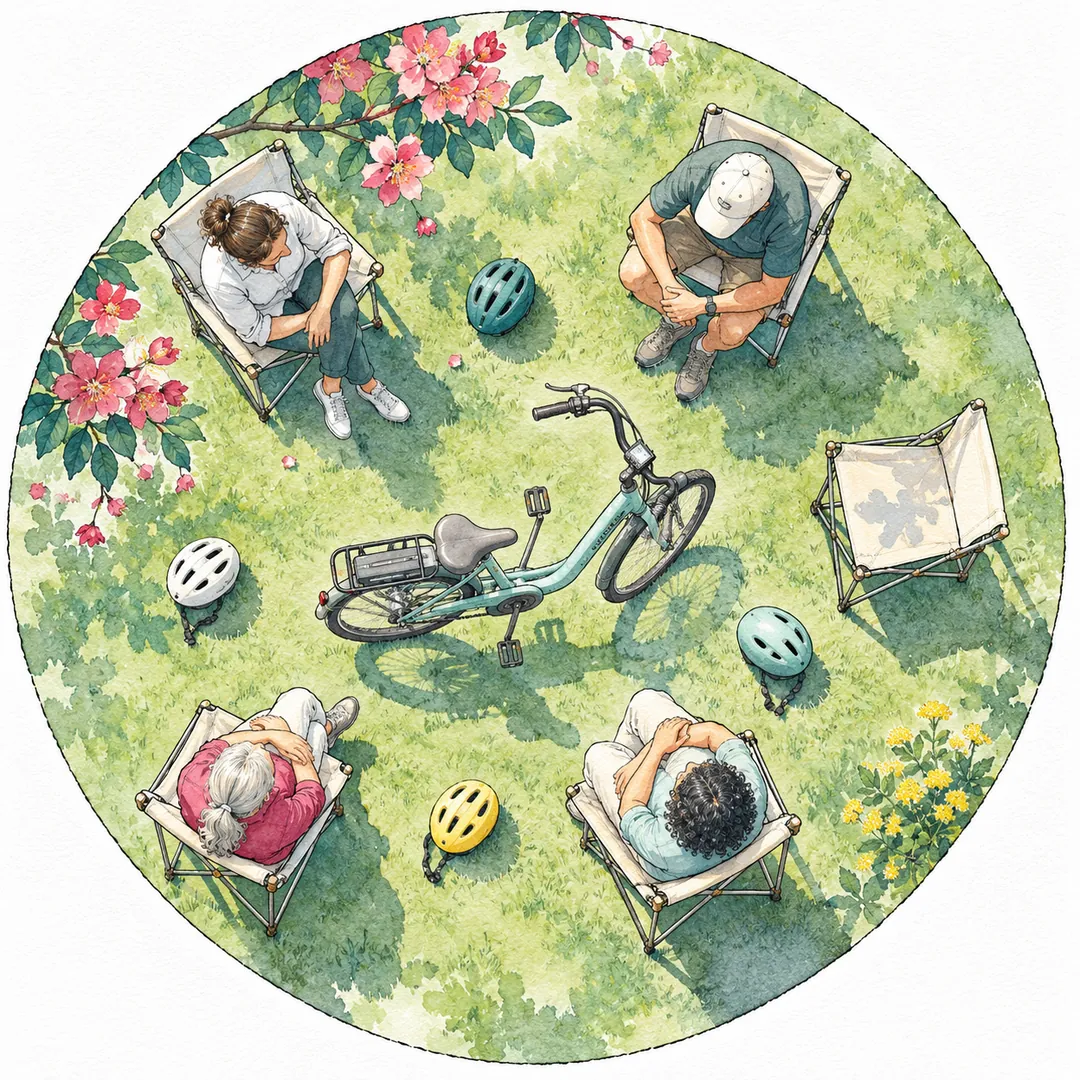
Some people who sign up for a shared e-bike will never have ridden one, and some will not have ridden any bike for years. The first ride decides whether they come back, and a rider who knows how the assist works, how to check the brakes and who to call is a safer rider for everyone on the path. Colibrino handles rider onboarding and support as part of the service, so your front desk, leasing office or campus staff are not left answering bike questions.
Launch week
Launch week is stage 4 of every program, right after the station is installed and inspected. It has three parts.
The launch notice
Before the first day, we prepare a launch notice for residents, students or neighbors: what the program is, who can ride, how to sign up, the rider rules, the dates of the safety sessions and how to reach support. You share it through your own channels, such as an email to residents, a lobby poster, a campus newsletter or a board mailing, because people read what comes from you.
Sign-up help at the station
During launch week someone from Colibrino is at the station at set times to help people create an account, choose a pass if the program has them, and take a first bike out of its bay.
Safety sessions
Each safety session is short, in person and held at or near the station. It covers:
- how pedal assist works: the motor helps only while you pedal and stops when you stop pedaling or brake
- setting the seat height and checking the bike before each ride
- starting, braking and turning with the assist on, on a quiet stretch of path or lot
- where riding is allowed on the property and how to reach the street safely
- riding in wind, in the dark and on wet or icy surfaces
- docking the bike so it locks and charges, and why batteries never go home
- what to do and who to contact if something goes wrong
We recommend a helmet on every ride and show how one should fit. Campus programs can repeat sessions at the start of each term, when new students arrive.
Example (fictional). At Larkspur Commons, a fictional 240-home apartment community, the station was installed and inspected on day 34. Launch week ran from day 35 to day 41, with two safety sessions held beside the lobby doors. See the full example network.
A written rider guide and a pre-ride check
Every rider receives the written rider guide: how to take a bike, ride, dock and charge, the rules, the minimum age for the program, and how weather changes riding. With it comes the pre-ride checklist, a short list a rider can run through in the bay: tires firm, brakes working, lights on, bell, seat height set and tight, no visible damage to the bike or battery. A sign on each station shows the main rules and the support contacts, and each bike carries the support phone number.
The support line
Riders, and hosts with a running program, reach Colibrino support in two ways:
- Phone: (307) 365-7748
- Email: support@colibrino.com
Support answers questions about accounts, passes and charges, bikes that will not release or dock, lost items, and anything that seems wrong with a bike. The hours when the phone is answered are set for each program and printed in its launch notice. In an emergency, call 911 first.
Reporting damage or a battery problem
Riders are the first to notice a soft brake, a wobbly wheel or a battery that smells odd. The guide asks them to stop riding, dock the bike if it is safe to ride back, and tell support the bike number and station. The bike is marked out of service until it is checked; the maintenance page explains what happens next.
A battery problem is treated differently. UL Standards and Engagement lists the warning signs: dents or punctures, leaking, swelling, a battery very hot to the touch, unusual smells, smoke, or hissing or popping sounds. NYC DOT advises that if a battery overheats or shows signs like these, you should stop using it and, if it is safe to do so, move it away from anything that can catch fire and call 911. It also notes that water and fire extinguishers do not work on lithium-ion battery fires. FDNY’s guidance for a battery fire indoors is to close the door, leave the building and call 911 from outside. Our guide gives riders the same steps, then asks them to contact support once they are safe. After any crash or hard fall, riders report it even if the bike looks fine, because a damaged battery can enter thermal runaway hours or days later.
Support that riders can reach
Support comes by phone and by email, so riders who are deaf or hard of hearing, or who prefer writing, have a written channel, and riders who prefer to talk can call. The rider guide is written in plain language. Where a program uses access codes, riders who do not use a smartphone can take bikes with a code, as described on rider access and payments. If a rider needs the guide in another format, they can ask support. Our accessibility page explains how to tell us about a barrier on the site or in the program.
What you provide, and what you receive
You provide help getting the word out: sharing the launch notice, a place for the safety sessions, and a contact who can answer questions about the property’s rules. You receive launch materials, safety sessions, the written rider guide and the pre-ride check, the support line for your riders, and a summary of support contacts in each monthly report. The launch readiness checklist shows everything that has to be in place before launch day. To start, plan a station.
Start with one station.
Tell us about the place: how many homes or beds, where people come and go, and where the nearest outlet is. We reply with questions or a time to walk the site with you.